Corpus Christi, TX · Garage Door Service
Portland homes run newer than most of the service area, and that changes the opener math. See where replacement pays off and what we install once we're on site.
Median household income in Portland runs $81,944, a step above the $79,797 median across the wider service area we cover out of Corpus Christi. That number matters more than it sounds like it should, because it sets where the repair-or-replace line actually falls. On an opener that's failing intermittently - the kind that opens on the third try, or grinds before it catches - a household at this income level is usually better served putting the money into a new unit with a modern circuit board and rolling-code security than sinking another service call into a motor that's already telling you it's done. That's not a sales pitch, it's just where the math lands when the repair cost starts closing in on half of a new install.
The housing stock backs this up. Portland's median year built is 1985, a touch earlier than the 1989 median across the four areas we track in this service territory. Most garage doors here were installed alongside openers that are now well past any reasonable service life - chain-drive units from the mid-80s to mid-90s, often the first opener the house ever had. When one of those finally quits, it's not usually a fluke. It's the age of the unit catching up with the house around it.
A house built in the mid-1980s wasn't wired with a garage opener circuit in mind the way newer construction is. We often find the outlet is on the wrong side of the door, or there's no dedicated circuit at all - just a shared line running to something else in the garage. That's a wiring conversation before it's an opener conversation, and it adds time to the job that a straightforward swap wouldn't need.
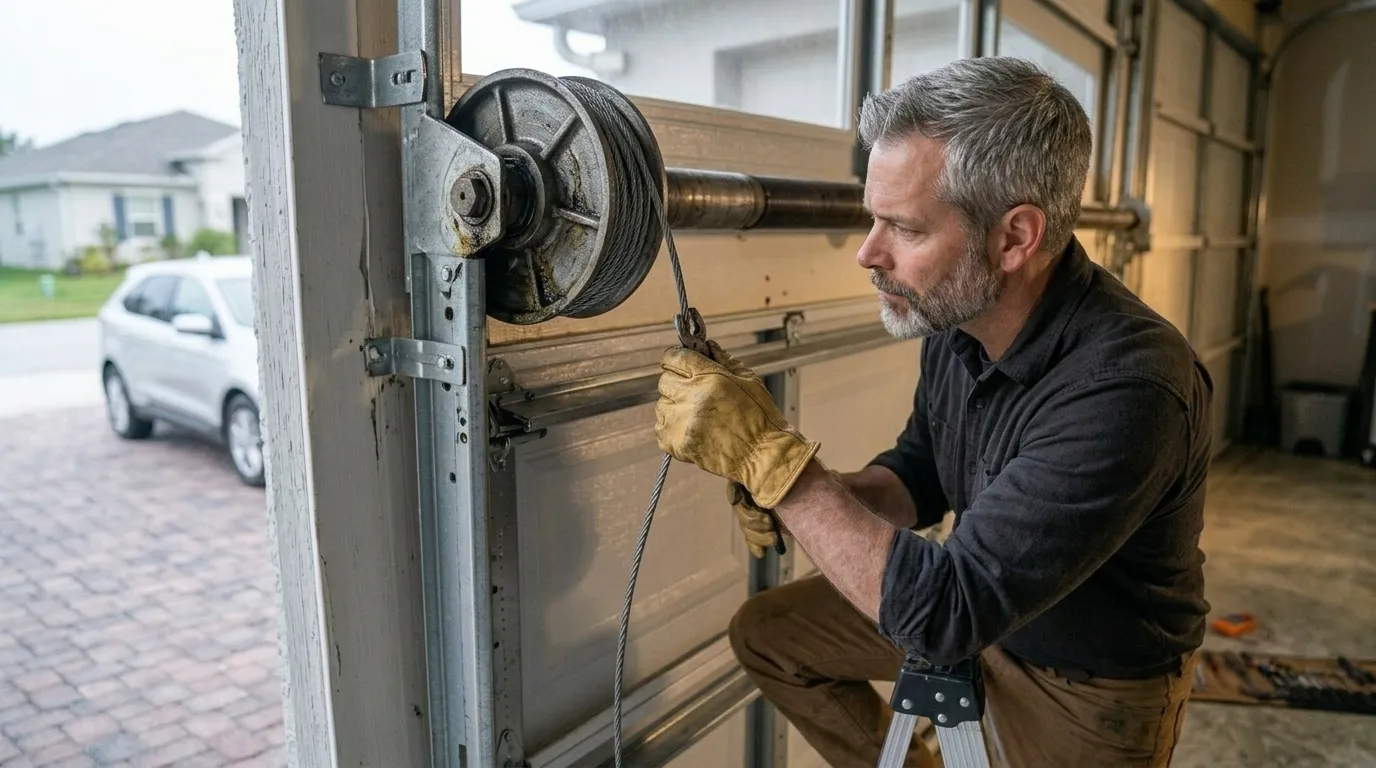
The other issue is the door itself. Openers from this era were matched to specific spring tension and door weight, and a lot of original doors are still on the track. Bolt a new opener onto an old door with sagging springs and worn rollers, and the opener will do the work the springs used to do - burning out the motor faster than it should. We check the door's balance before we ever touch the opener, because installing a new unit on hardware that's fighting it just moves the failure point somewhere else.
Climate here is mild temperate, which is a break in our favor - we're not dealing with the extreme heat cycling or humidity swings that wreck circuit boards and rot belt-drive components faster elsewhere. It means an opener installed correctly here should hold up on its own merits, not fight the weather too.
We carry belt-drive and chain-drive openers, along with the wall controls, safety sensors, and rolling-code remotes that go with them. For houses still running original 1980s hardware, we also stock the mounting brackets and rail extensions that older door frames need, since a lot of those dimensions don't match what comes standard in a new opener box.
What we don't stock on the truck is a wide range of specialty circuit boards for obscure opener brands from that era - if a customer wants to repair rather than replace a unit that old, parts lead time on some boards can run out past what's reasonable to wait on. That's usually the point where we recommend replacement instead, and it's an honest limitation, not a workaround to sell a new unit.
We travel from Corpus Christi, 13 miles to Portland, so the drive is part of the schedule when we book a job here. Once on site, a straight swap - old opener out, new one in, same mounting points, existing wiring reused - is usually the fastest version of this job. Add a wiring correction or a door balance issue, which comes up more often on the older end of Portland's housing stock, and the job runs longer.
We don't quote exact hours over the phone before we've seen the garage, because the variable isn't the opener - it's what's already on the wall and the track. A house built in 1985 with its original door and outlet setup is a different job than a house with a door that's already been replaced once and rewired to code.
Installing an opener yourself isn't unreasonable if the door is already balanced, the wiring is already in place, and you're comfortable working overhead with a spring-loaded system. Where it goes wrong is skipping the balance check - a door that's even slightly out of balance will look fine on a new opener for a few months, then start putting strain on the motor gears until it fails again.
Given that a lot of Portland's roughly 7,334 households sit in homes from the same 1980s construction wave, with original doors more common than not, we'd rather see someone call for the balance check even if they install the opener themselves. It's a cheap way to avoid paying twice.
If the opener is from the original 1980s-90s installation, repair parts are getting harder to source and lead times can run long. At Portland's income level, most homeowners come out ahead putting that money toward a new unit rather than chasing parts for a motor that's already past its expected life.
Usually yes, but we check the door's spring balance first. A door that's sagging or out of balance will overwork a new opener's motor, so we don't bolt on a new unit without confirming the door itself is still sound.
No, we run this job out of Corpus Christi, about 13 miles away. There's no separate depot or response-time promise for Portland specifically - it's the same crew and truck making the drive out for the install.
Houses built around Portland's 1985 median often didn't wire a dedicated circuit for the garage opener. We sometimes find the outlet on the wrong side of the door or sharing a circuit with something else, which we address before the opener goes in.
Call now or request a free quote - same-day service on most repairs, upfront written pricing.
