Corpus Christi, TX · Garage Door Service
Corpus Christi Garage Door Co installs openers in Port Aransas, where most homes date to 1989 and need newer mounting hardware than the city's older stock.
Port Aransas sits about 7 miles from Corpus Christi, and the homes here don't match the older housing stock we see closer to downtown. Most of this town went up around 1989, which puts the garage construction squarely in the era of pre-wired openers and standard steel track - not the older wood-jamb setups we still run into on the city's older blocks. That matters for an install because the header framing, the electrical rough-in, and the track clearance are all built to a spec that's roughly thirty-five years old, not fifty. We're not fighting a mismatched jamb or adding a dedicated circuit from scratch the way we sometimes do on older city houses. The job here is closer to a straight swap: pull the old unit, check the header bolts and the door weight, and mount a chain or belt drive to hardware that's already sized right. The one thing we do check every time, regardless of build year, is whether the door itself is balanced. An opener fighting a spring that's already tired will burn out early no matter how new the house is, so we test spring tension before we ever bolt anything to the ceiling.
Because most of the housing stock in this part of the service area dates to the same late-1980s window, the opener hardware we carry on the truck covers it without much guessing. Standard 7-foot rail systems, 1/2 horsepower chain and belt drives, and the newer safety-sensor pairs required on any opener install today all fit the door sizes and header heights typical of a house built in 1989. We don't stock every smart-opener brand on the market - if you want a specific app-connected model that isn't one we install regularly, expect a short wait while we order it in rather than a same-visit fit. What we do keep on hand covers the bulk of what a house this age needs: standard remotes, keypads, and the wall consoles that replace tired mechanical ones. Climate here is mild temperate, so we're not building in the extra weatherproofing you'd want on a unit exposed to hard freeze-thaw cycles - just standard hardware rated for coastal humidity, which is the actual condition that matters more than cold.
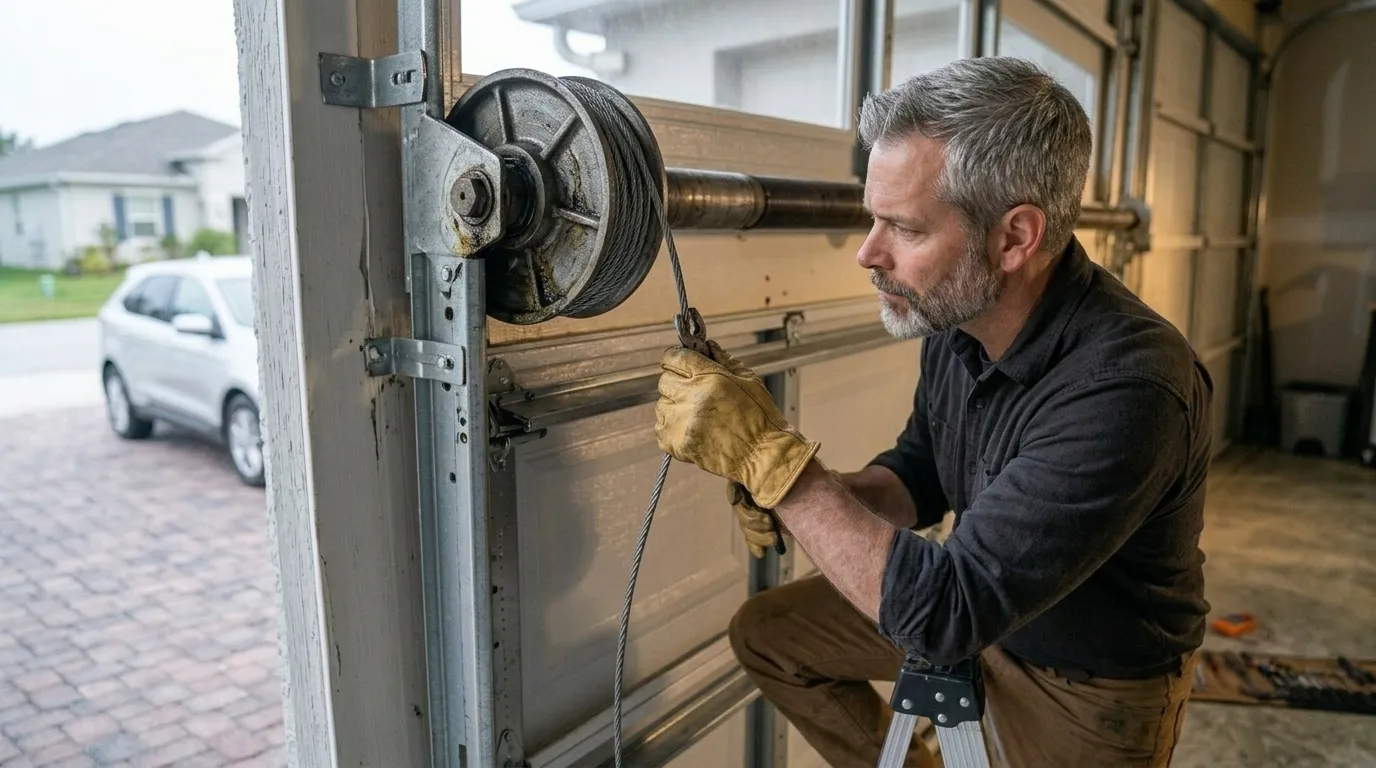
A homeowner with basic tools can hang a chain-drive opener on a garage built to 1989 spec without much drama - the header is standard, the wiring is usually already there, and the kit instructions assume exactly that kind of framing. Where it gets risky is the spring side. If the door doesn't lift smoothly by hand with the opener disconnected, that's a spring problem, not an opener problem, and torsion springs under load can put someone in the hospital. We'd rather get a call about a spring that's binding than have someone improvise a fix on a ladder. If your existing opener still runs but the remote range has gotten short or the wall button is unreliable, that's often a $20 sensor or logic-board issue, not a reason to replace the whole unit. Replacing early is the expensive answer to a cheap problem.
A straight opener swap on a door built to this era's standard track and header takes a few hours once we're on site, not counting the drive out from Corpus Christi. Most of that time goes into removing the old unit cleanly, checking the door balance, and running the new safety sensors correctly - sensor alignment is the step people skip when they DIY it, and it's also the step code requires. If the existing wiring needs updating or the header framing has settled unevenly over three and a half decades, the job runs longer. We tell people up front when that's likely rather than quoting a flat number that doesn't hold on an older bracket.
The complaint we hear most from this area isn't a dead opener - it's one that runs but doesn't fully close, reverses partway, or takes two tries on the remote before it catches. On houses from this build period, that's almost always a sensor alignment problem or a logic board losing track of the travel limits, not a motor failure. Full motor burnout is less common on a unit this age than people expect; it's the electronics and the safety sensors that fail first. We check those before we recommend a full replacement, because swapping a working motor for a new one when the fix was a $30 sensor is money spent for nothing.
About 7 miles. We cover it as part of the regular service area, so a truck comes out from Corpus Christi rather than from a separate branch located in town.
Usually not. Houses from that build era were typically wired with a garage circuit already in place, so most installs are a direct swap onto existing wiring rather than a new electrical run.
The mild temperate climate here means we're not designing around hard freezes, but coastal humidity does matter for corrosion on exposed hardware, so we use hardware rated for that condition rather than cold-weather gear.
Usually not. On houses of this age it's most often a sensor alignment issue or the logic board losing its travel limits. We check those first before recommending a motor replacement.
Call now or request a free quote - same-day service on most repairs, upfront written pricing.
