Corpus Christi, TX · Garage Door Service
Opener installation for Ingleside homes built mostly in the early-to-mid 1990s. We travel from Corpus Christi to swap out worn chain-drive units for modern openers.
The opener box at the hardware store makes it look like a weekend job: bolt a rail to the header, hang the motor, run a wire to a switch. On paper that's true. What trips people up in Ingleside is what's already on the ceiling. Homes here mostly went up in the early-to-mid 1990s, with the median build year landing at 1994, and that means original headers and framing sized for the lighter doors and lighter openers of that era.
Swap in a newer opener built for a heavier insulated door, and the mounting bracket that held a 1994-era chain-drive fine for thirty years can be undersized for the new unit's pull. You can absolutely do the wiring and the bolt-up yourself. What's harder to eyeball from a ladder is whether the header framing and the door's spring balance are still matched to what you're hanging. Get that wrong and the opener works for a few months, then starts slipping the gear or straining the rail, and you're back up the ladder.
We're honest that a straightforward swap - same rail length, same door weight, existing wiring in place - is within reach for a homeowner who's comfortable with a drill and a torque wrench. Where we come in is when the door itself is heavier or lighter than the original, or when the safety sensors need re-aiming because the old bracket location isn't square anymore.
We run this job out of Corpus Christi, about 8 miles from Ingleside, so the drive is short but it's still a drive - we don't keep a depot or a truck stationed in town, and we don't quote a fixed response window here. A standard opener swap, once we're on site, usually runs a couple of hours: old unit down, new rail and motor up, travel limits set, sensors aimed, and a full open-close cycle test before we leave.
What stretches the job is age-related surprises. On a house from the early 1990s the wiring for the wall switch is sometimes original too, and if the insulation's brittle we replace that run rather than patch it, which adds time but saves a callback. We'd rather tell you that up front than surprise you with it once the panel's open.
Ingleside sits in the same mild temperate climate band as the rest of the service area - no hard freezes, no extreme heat swings that crack housings the way they do further north. That's the good news for opener life here: the motors and logic boards don't get cooked or frozen the way they would in a harsher climate. The failures we see are almost entirely mechanical wear, not weather damage.
That wear tracks straight back to the build year. A chain-drive opener original to a 1994 house is now pushing thirty years on its gear and sprocket, and that's about the working life you'd expect from that generation of hardware, mild climate or not. The housing stock across this part of the service area is mostly 1980s-and-90s construction, which means a lot of these openers are aging out in the same window - it's not one bad batch, it's one bad decade of gear plastic finally giving up at the same time across a lot of driveways.
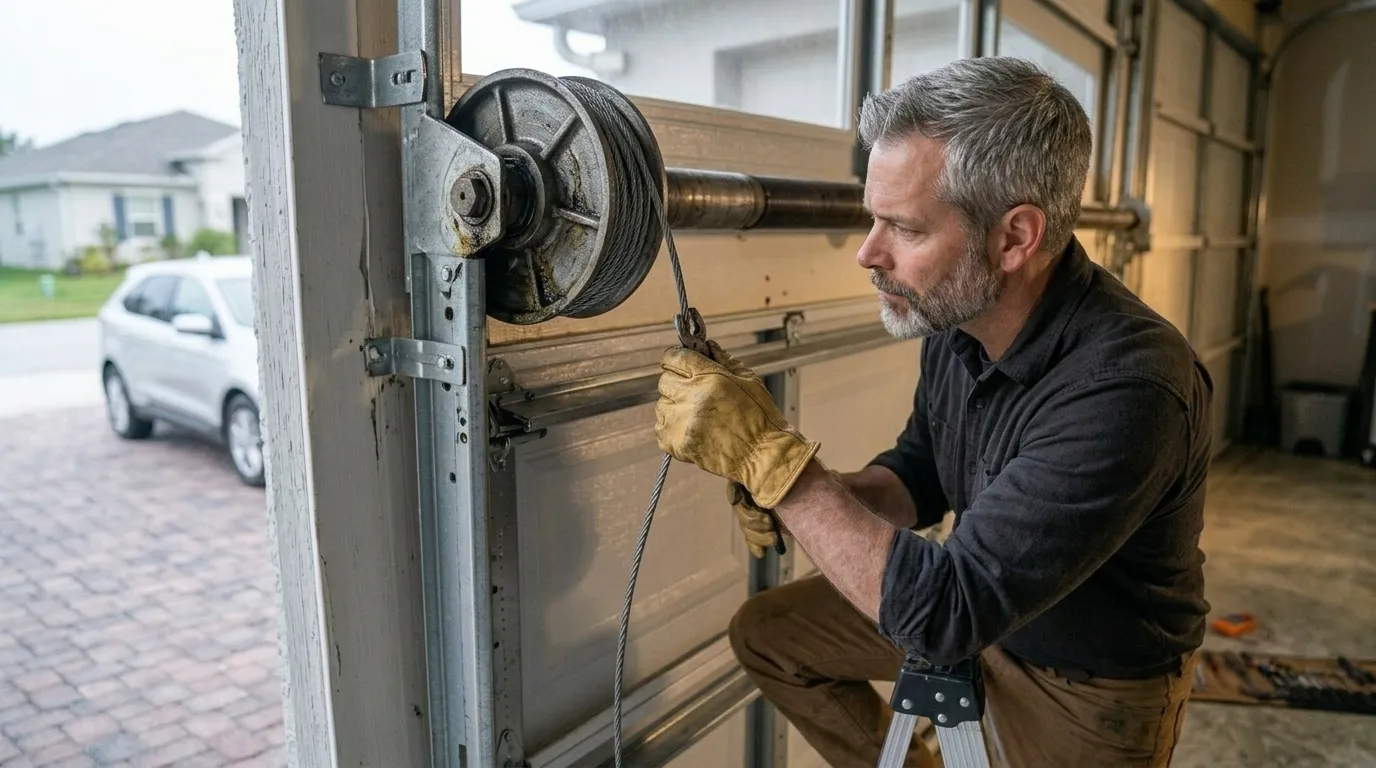
Installing a new opener on an older Ingleside house usually means more than just the motor. We check the header bracket load rating against the new unit's horsepower, confirm the door's spring balance is still correct (a heavier belt-drive opener working against a spring set for a lighter original door burns out fast), and re-position the photo-eye sensors if the old mounting holes don't line up with a modern bracket.
One limitation worth saying plainly: if the door panels themselves are original and starting to sag or bind on the track, a new opener won't fix that, and installing one on a door that isn't traveling true just transfers the strain to the new motor. In that case we'll say so before we hang anything, even if it means a shorter job and a smaller bill that day.
Usually yes, if the door itself is traveling smoothly and the spring balance is right. The issue we run into on 1990s-era Ingleside homes is a header bracket sized for a lighter original opener, or a door that's started to bind - either one needs addressing before the new motor goes up.
No. We run this job out of Corpus Christi, about 8 miles away, and travel out for installs and repairs. There's no local branch or dedicated response window for Ingleside - we schedule the drive as part of the job.
Chain-drive openers from that era typically last around thirty years on their gears before the plastic sprocket wears through. It's not a weather issue in this climate - it's just mechanical age catching up all at once, which is common across houses built in the same window.
No. If the door panels or track are the real problem, a new opener just transfers the strain to new hardware instead of solving anything. We'll flag that before installing rather than sell you a motor that's fighting a bad door.
Call now or request a free quote - same-day service on most repairs, upfront written pricing.
